
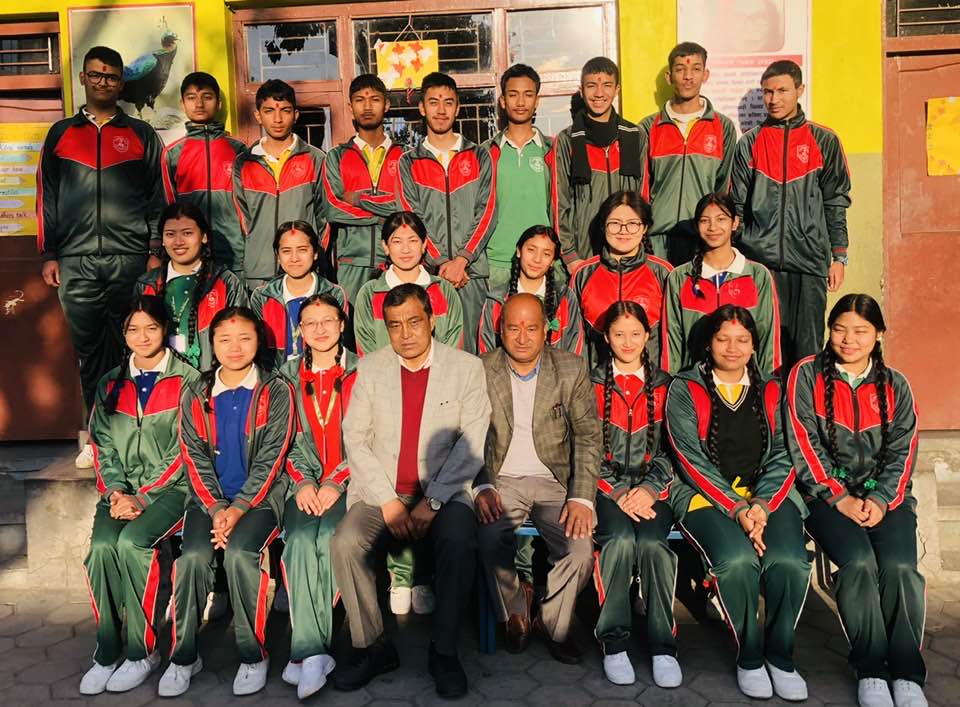
Congratulations! You’ve just reached one of the biggest milestones of your academic journey—the SEE (Secondary Education Examination). Now, a new path begins with full of possibilities and opportunities.
Let’s face it, the time after the Secondary Education Examination (SEE) until we receive our results can be quite chaotic. After 13 years of schooling, we suddenly have three months of free time. It’s natural to feel overwhelmed and indecisive about what to do now.
It’s essential to take care of yourself during this break and use it to recharge and prepare for the next phase of your academic journey.
What’s next?
“You don’t have to be great to start, but you have to start to be great.” –Zig Ziglar
Many of the students take the conventional route focusing only on course studies and grade marks. Do you prefer to be one amongst them? How about choosing the route that is different and filled with thrilling experience? Don’t you feel like exploring a future that’s full of innovation, technology, and limitless opportunities?
If you love technology, creativity, and problem-solving, or is only a beginner then the career in IT could be the best choice. Some of the most successful people in the world, including Mark Zuckerberg (Facebook), Elon Musk (Tesla & SpaceX), and Sundar Pichai (Google CEO), began discovering technology at an early age rather than focusing only on the grade studies.
Also, here is the fact that you may not know: Nepal’s IT industry is one of the fastest growing, highest paying industries of today. Whether you have interest to develop apps, design websites, analyse data, or in cyber-world —IT is where you need to be. And the best part? You can start right after SEE!
Here are the things you can do during this short break:
Take a break
This is a great opportunity to take a break from intense studying and exam pressure for a few days. Spend time with family and friends, pursue a hobby or interest, or take a short trip to refresh your mind. Use this time to learn a new skill or subject that interests you.
“Education is the passport to the future, for tomorrow belongs to those who prepare for it today.” —Malcolm X
Learn a new skill
Learning a new skill can be a great way to spend your time, especially during a short break before your SEE results are published . Especially learning IT skills can be a valuable asset in today’s world, and many resources are available to help you learn. You can enroll in an online course, attend workshops, or join a community group.Here are some steps you can take to start learning IT skills:
Step 1 : Choose a skill
First, decide what skill you want to learn. Think about your interests and what you want to achieve by learning this skill. Information Technology (IT) is a broad field, so choosing a specific skill or technology to focus on is essential. For example, you may want to learn programming languages like Python or Java or learn how to work with databases, web development, or data analysis.
Step 2 : Find resources
There are many online resources available for learning IT skills. Websites like Codecademy, Udemy, and Coursera offer the intresting courses and tutorials for freshers on various IT skills.You can also find career consulting IT forums and online communities to ask questions and get support. Set specific goals for what you want to achieve by learning the skill. Break down the skill into smaller, achievable steps, and create a timeline for when you want to complete each step.
step 3 : Practice
IT skills require training to master, so it’s essential to set aside time each day or week to practice. Start with small projects and gradually work up to more complex tasks.
‘ Start small and scale Big’
Step 4 : Get feedback
Seek feedback from others with expertise in your learning skills. You can ask for feedback from online communities and forums or find a mentor who can guide you and offer feedback.
“Don’t let what you cannot do interfere with what you can do.”
Step 5 : Build a portfolio
As you learn IT skills, build a portfolio of your work. This can include projects you have worked on, websites you made, or written code. A portfolio can be a valuable tool when applying for jobs or internships in IT.
Career Opportunities After SEE: Why Choose an IT Career?

Career in IT after SEE (Secondary Education Examination) is a smart choice, along with the technical aspects that make IT a high-growth field.
1 Job Security & High Demand (Industry Growth)
– Global Digital Transformation: Businesses are shifting to cloud computing (AWS, Azure, GCP), AI/ML, cybersecurity, and data analytics, increasing demand for IT professionals.
– Nepal’s IT Sector Growth: Nepal’s software outsourcing, freelancing, and remote work markets are expanding, with companies hiring for:
– Software Development (Web, Mobile, Desktop)
– DevOps & Cloud Engineering
– Cybersecurity & Ethical Hacking
– Data Science & AI Engineering
– Automation & AI: As industries automate, IT skills are becoming essential to maintain and develop these systems.
2. No University Degree Required (Skills-Based Hiring)
– Alternative Education Paths:
– Online Certifications:(Cisco CCNA, AWS Cloud Practitioner, Google IT Support, Microsoft Certified)
– Bootcamps & Short Courses (Full-Stack Development, Cybersecurity, Data Science)
– Self-Learning via Platforms (Coursera, Udemy, freeCodeCamp, Khan Academy)
– Industry Recognizes Skills Over Degrees: Many IT roles prioritize GitHub portfolios, certifications, and practical skills over formal education.
3. High Salary Potential (Remote & Freelance Opportunities)
– Global Pay Scales for Remote Work:
– Software Developers can earn upto $30k–$100k+/year working remotely for international companies.
-Freelancing (Upwork, Fiverr, Toptal) allows earning in USD/EUR (e.g., web developers charge $20–$100/hour).- Nepal’s IT personnel
Salaries:
– Entry-Level (Jr. Developer, IT Support): NPR 30,000–60,000/month
– Mid-Level (DevOps, Full-Stack Dev): NPR 80,000–200,000/month
– Senior (AI Engineer, Cybersecurity Expert): NPR 200,000+/month
4. Work from Anywhere (Remote & Freelance Flexibility)
– Remote Work Technologies:
– Cloud Computing (AWS, Azure, DigitalOcean) enables working from anywhere.
– Collaboration Tools (Git, Slack, Zoom, Jira) facilitate global teamwork.
– Freelancing & Digital Nomadism:
– Web Development (React, Node.js, Django)
– Mobile App Development (Flutter, Kotlin, Swift)
– Cybersecurity (Bug Bounty, Penetration Testing)
– AI & Automation (Python, TensorFlow, RPA)
5. Career Growth (Fast Progression with Continuous Learning)
Career Pathways in IT
1. Beginner (Certifications, Internships) → Jr. Developer/IT Support
2. Mid-Level (Specialization: DevOps, Cloud, Cybersecurity, Data Science)
3. Senior/Lead (Architect, Team Lead, CTO potential)
Emerging Fields in IT with High Growth:
– Artificial Intelligence & Machine Learning (Python, TensorFlow)
– Blockchain & Web3 (Solidity, Smart Contracts)
– Cybersecurity (Ethical Hacking, CISSP, CEH)
– Cloud & DevOps (AWS, Kubernetes, Docker, Terraform)
Let’s talk! Why to Start Early?
– Age Advantage: Learning programming (Python, JavaScript) early gives a competitive edge.
– Low-Cost Learning: Free resources (YouTube, freeCodeCamp) vs. expensive degrees.
– Entrepreneurship Opportunities: Build SaaS, apps, or IT consultancies without heavy investment.
IT offers high demand, remote work flexibility, strong salaries, and rapid career growth—without requiring a traditional degree. By starting with certifications, self-learning, and freelancing, SEE graduates can build a lucrative IT career faster than many degree holders.
For enthuastic and innovative person/students, career in IT sector will pave a strong foundation towards their life goals.
“The expert in anything was once a beginner.”
Some Academic Streams in Nepal After SEE
In Nepalese schools, students decide between the Science, Commerce, and Arts streams. Science includes Physics, Chemistry, Biology, and Math for careers in engineering or medicine. Commerce covers Accounting, Economics, Business Studies, and Math, attracting those interested in business or finance. Arts involves Literature, History, Sociology, and Psychology for careers in journalism, literature, or the arts.
Knowing about these options is important for students to match what they like and their future dreams, helping them create a path in education that fits their strengths and goals. Making these choices with good information not only makes their time in school more interesting but also sets the foundation for a meaningful work life in the area they choose to focus on.
For others with something creative minds, we will discuss the best things students can do after taking SEE examination in Nepal other than IT sector.
Hands-On Training Opportunities:
After finishing SEE, if you are searching the ways to support yourself for your further study ,it’s a good idea to check out vocational training programs in your local area. These programs focus on practical skills that are in demand in today’s job market. For instance, you can take courses in plumbing, electrical work, or carpentry, Handicraft allowing you to gain hands-on skills that employers find valuable. The advantage of this hands-on trainingwill provide a strong string to bind your confidence and meet your economic necessities in the near future and also,when you enter the workforce – it gives you a practical edge that sets you apart.
Entrance Exam Preparation:
Specific entrance exams in Nepal pave the way for various courses. Understanding these exams and preparing strategically is crucial for successfully navigating the competitive landscape. Entrance preparation will guide you through the landscape of entrance exams held by reputed colleges, providing insights and tips to help you excel.
Internship and Work Experience
If you want to make pocket money yourself , here’s the best idea!Look for internships and part-time jobs in your local area. Working nearby has practical benefits, making you more appealing to employers and setting you on a path for a successful career journey. Gaining experience in your own community can open doors professionally. Your parents and seniors can guide you on how to navigate and make the most of these opportunities, ensuring you get the maximum benefits and lay a strong foundation for your career.
Language Courses
Thinking about taking language courses is a good move to enhance your communication skills. Learning additional languages goes beyond just looking impressive; it genuinely broadens your job prospects and deepens your understanding of different cultures. In straightforward terms, enrolling in language courses increases your awareness of the world and makes you more appealing to employers. It’s not about trying to convince you to sign up for a course; it’s about illustrating how adding another language to your skills can bring more richness to your life and expand your career possibilities.
“Genius is 10% inspiration, 90% perspiration.” —Thomas Edison
Here’s a popular saying by Dr. Seuss “You have to be odd to be No.1.” so, let yourself be odd out of all…
As a SEE accomplisher, your role as a student goes beyond achieving best grade and education. Undoubtly, You’re a leader, role model, coach, advisor and facilitator of positive growth. Since you had spent so much of your time in your classroom, it’s up to you and your ultimate decision to make your leaping steps in positive, inspiring and promised environment, your field of interest where you guys can do your best and be yours best selves….


Leave a Reply